FlashDreams
FlashDreams is an inference and serving runtime for turning
world models into live, controllable simulations. FlashDreams runs models in a continuous
loop, carrying state forward and streaming frames while new actions or sensor inputs change
what happens next step.
Whether the application is a game world, an autonomous-vehicle simulator, robotic policy testing, or a virtual training environment, FlashDreams is the runtime to make it possible.

Explore FlashDreams
Choose a section to get started or browse the project.
Why FlashDreams?
Serving World Models is Hard
Building a static clip generator is not enough for world-model serving.
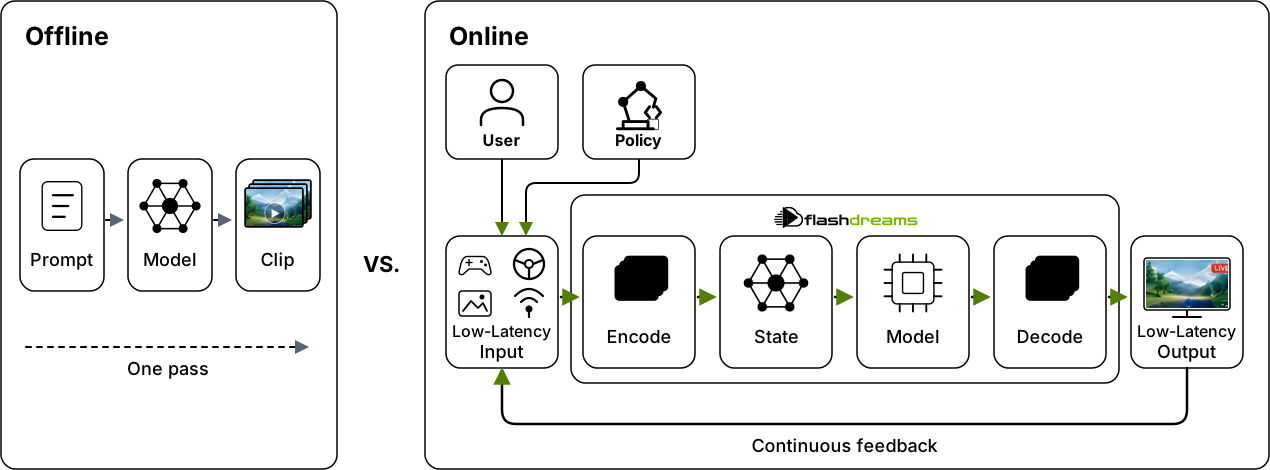
Worlds evolve over time
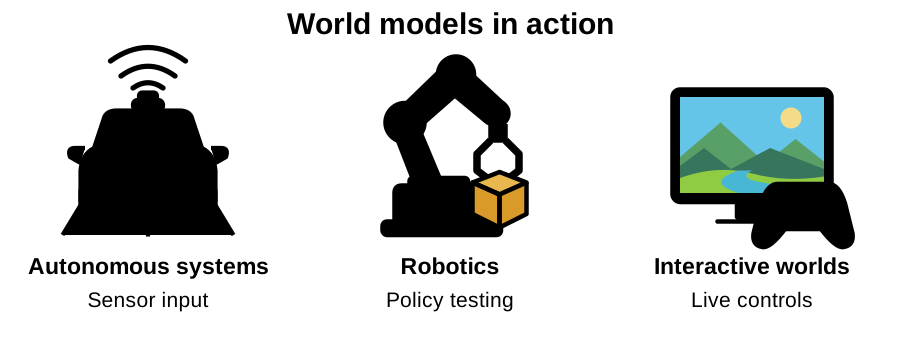
World models are taught to generate and evolve an environment over time. They support robotics-policy testing, autonomous-vehicle simulation, interactive worlds, and other applications.
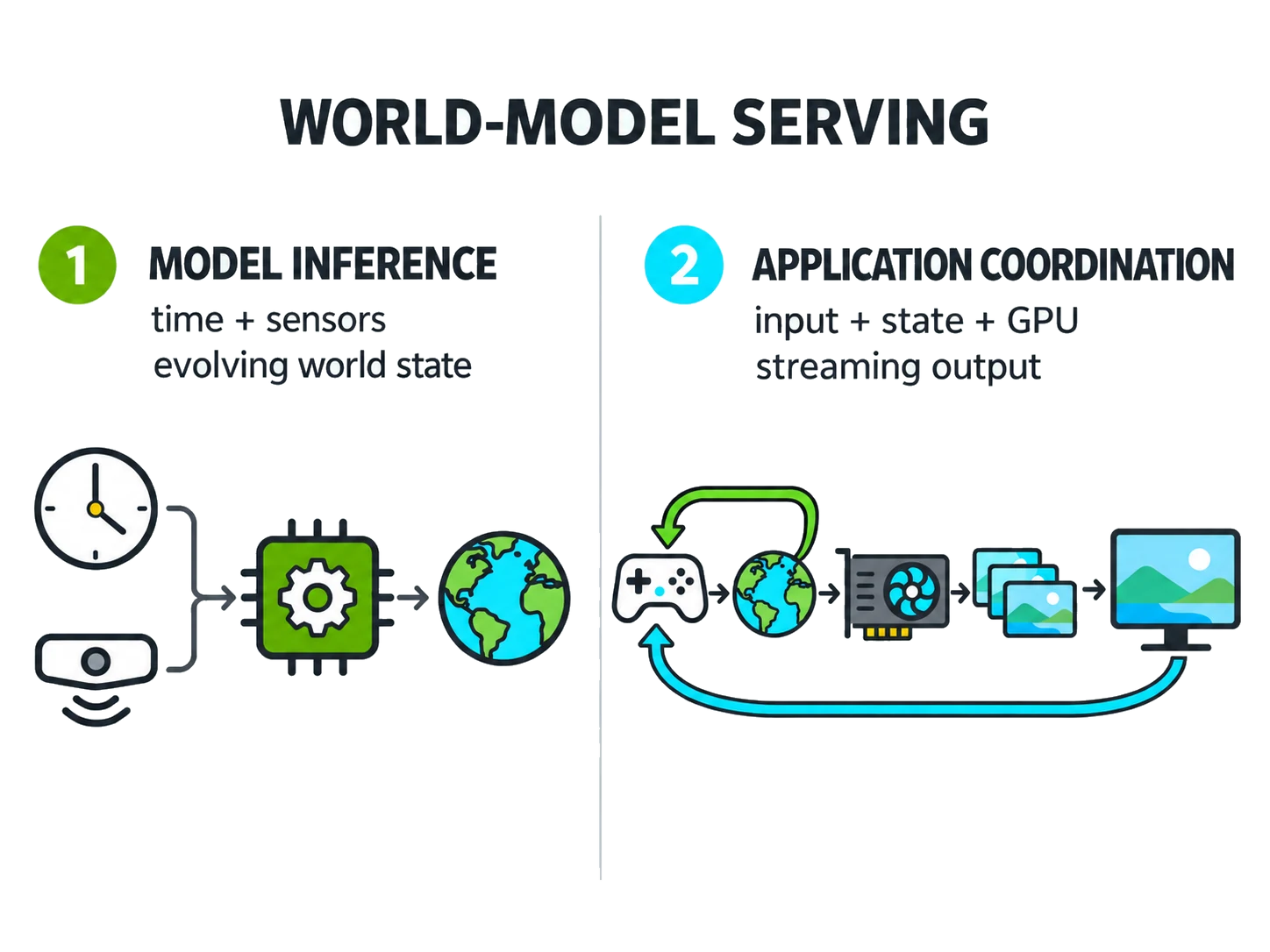
Serving has two parts
- Inference of a video model that consumes inputs such as clock time and sensors while evolving world state.
- A separate application that coordinates inputs, model state, GPU inference, and output.
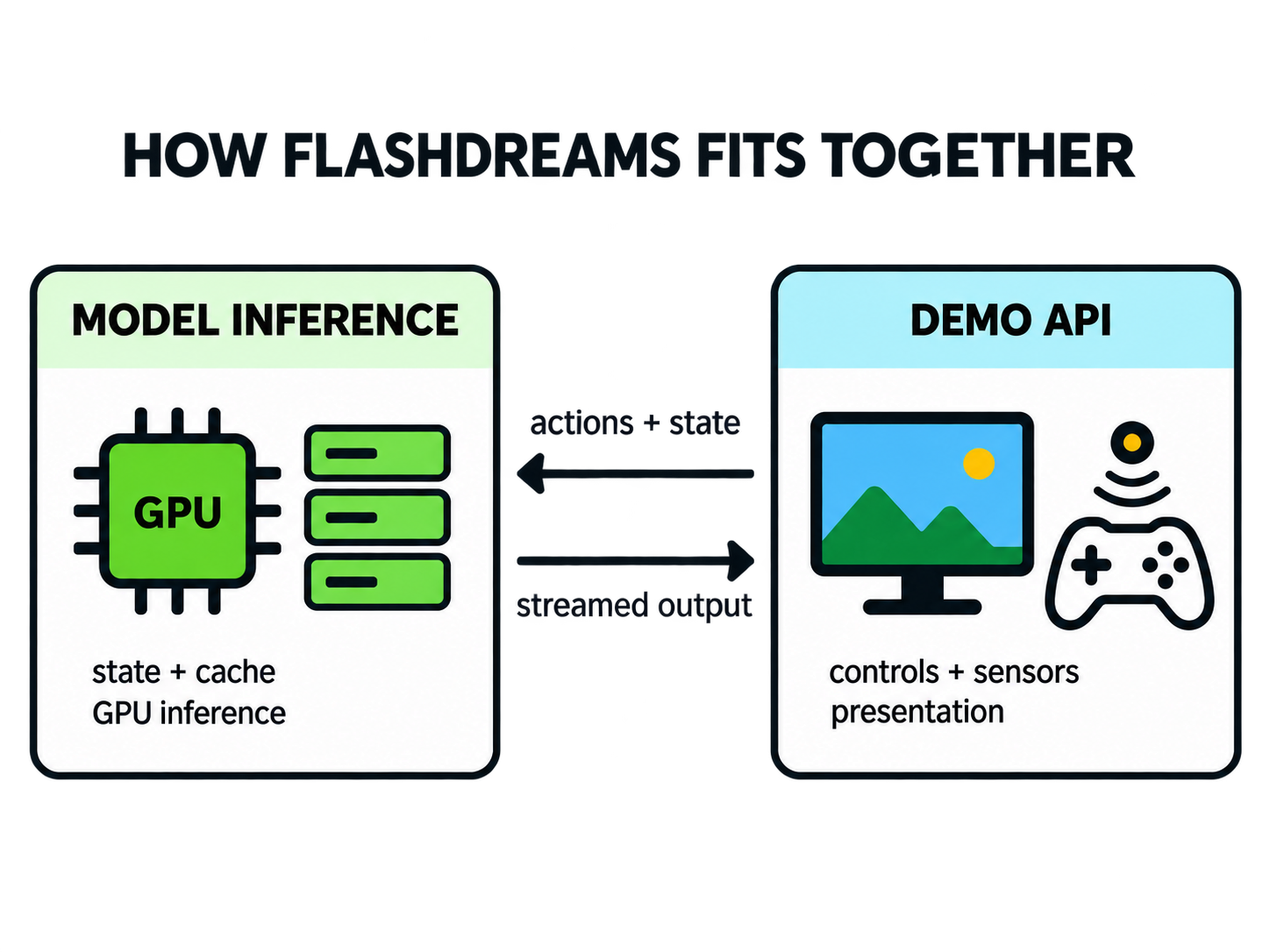
FlashDreams was built for both parts:
- The Inferencing API helps model designers implement stateful world-model inference.
- The Demo API helps application developers build experiences around the constraints of world-model serving.
Performance
Each tile shows speedup over an existing implementation of the same model. Both run the same weights on the same GPU, so the gain comes from the FlashDreams runtime alone.Try FlashDreams!
The Get Started guide walks from a fresh checkout to running OmniDreams, an interactive driving world-model demo built on FlashDreams.
Supported Models
Streaming and autoregressive model implementations emit per-step output with sub-second latency once warm; bidirectional model implementations are kept as full-block parity references. Each model page carries the canonical invocation, the checkpoint source, and the per-implementation knobs.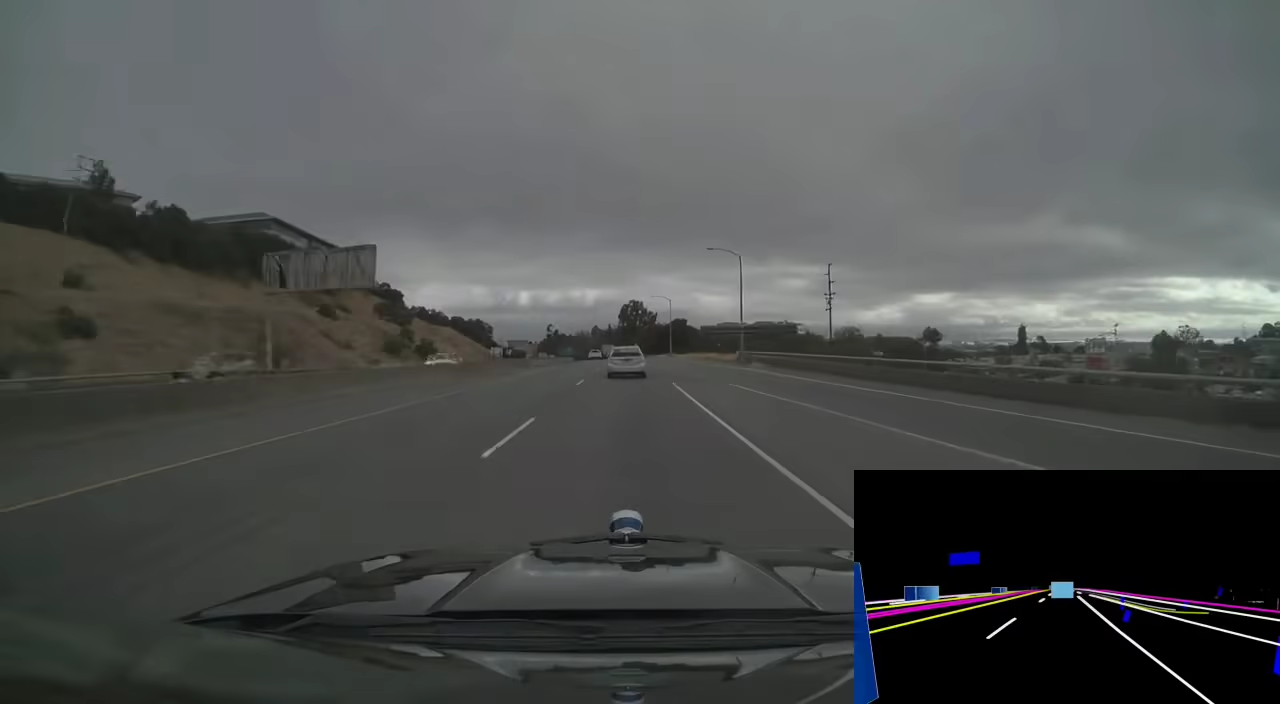 OmniDreamsInteractive world simulator for autonomous vehicles.
 Cosmos3 Nano Sim AutoDriving video with multiple cameras and optional LiDAR.
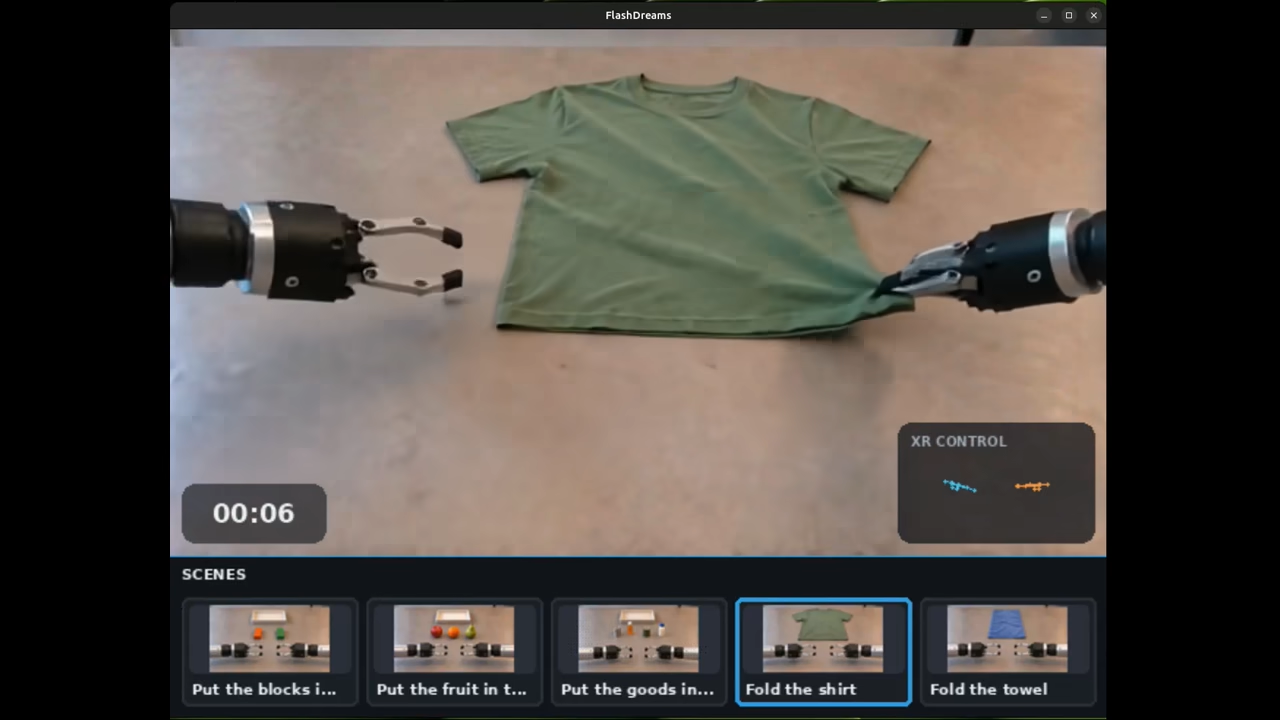 Cosmos3 Nano Sim BimanualController-driven robot-manipulation video.
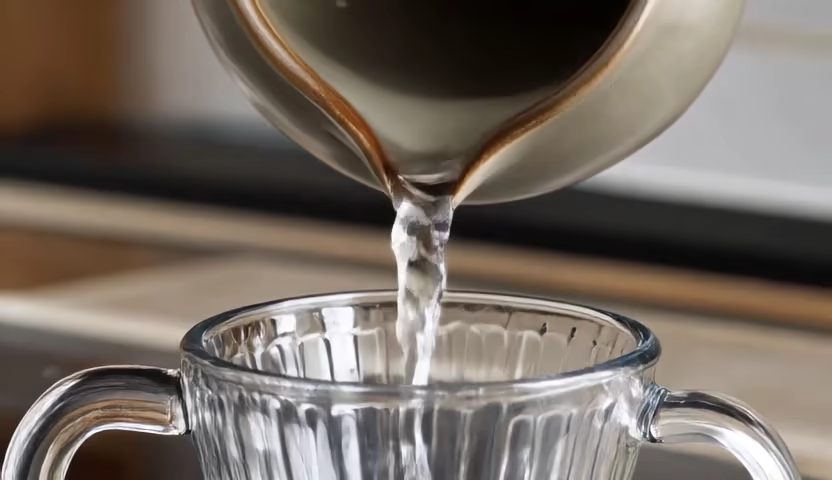 Self-ForcingAutoregressive text-to-video based on Wan 2.1.
 Causal-ForcingAutoregressive text/image-to-video based on Wan 2.1.
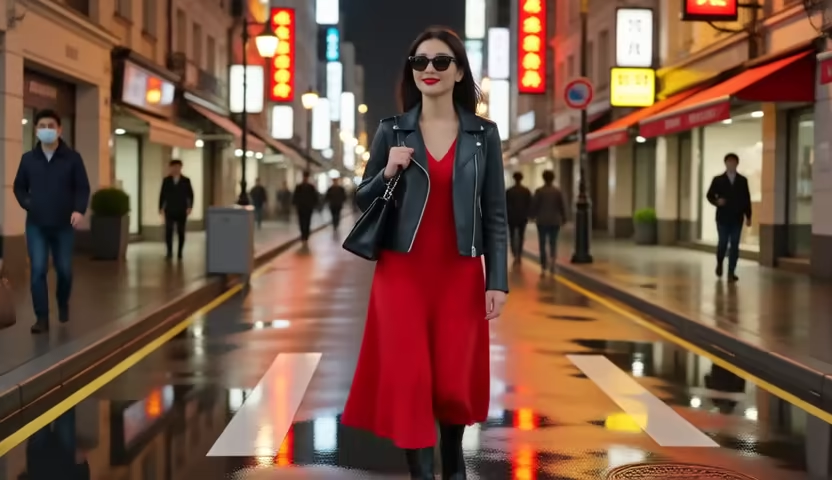 Causal Wan 2.2Autoregressive text-to-video based on Wan 2.2 from FastVideo.
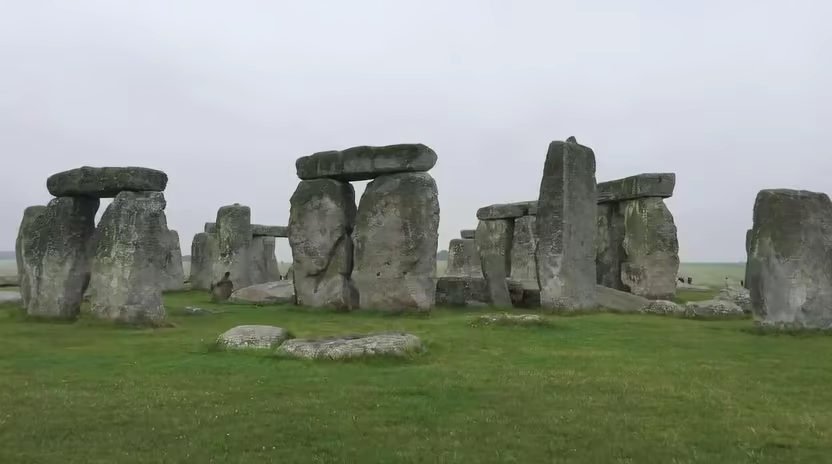 LingBot-WorldCamera-controllable image-to-video world model.
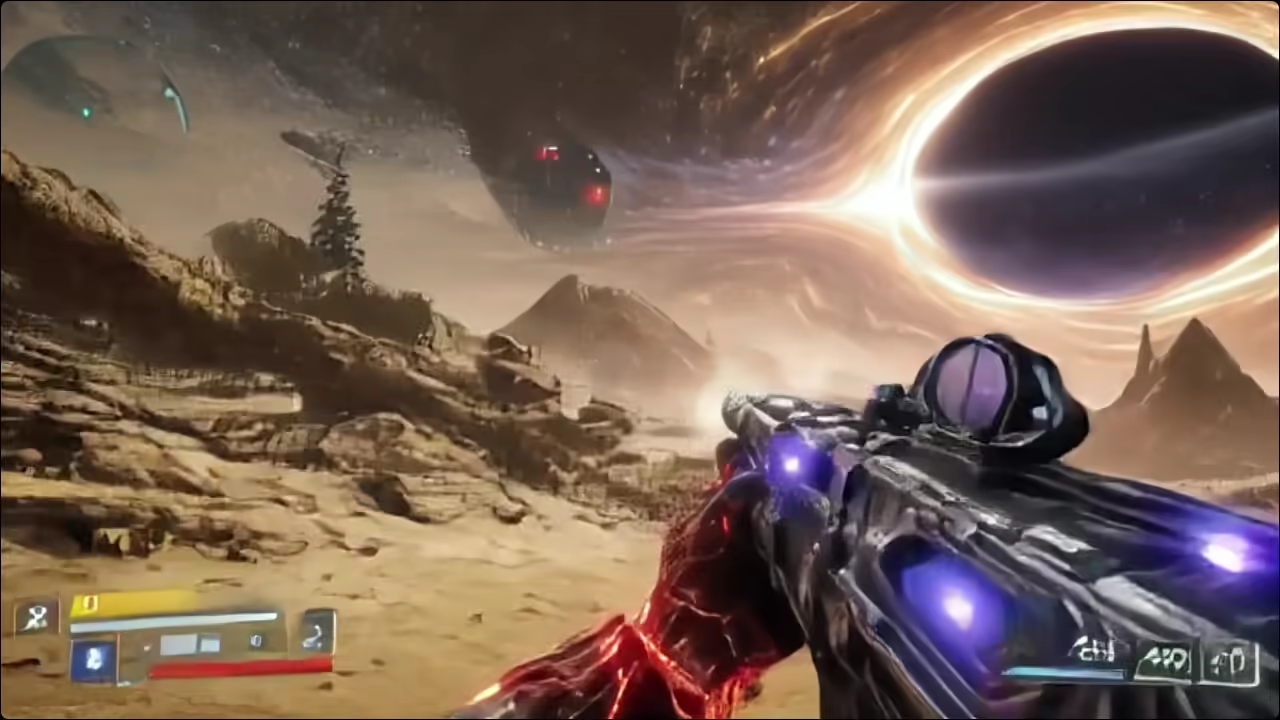 Waypoint 1.5Interactive world model controlled by keyboard and mouse.
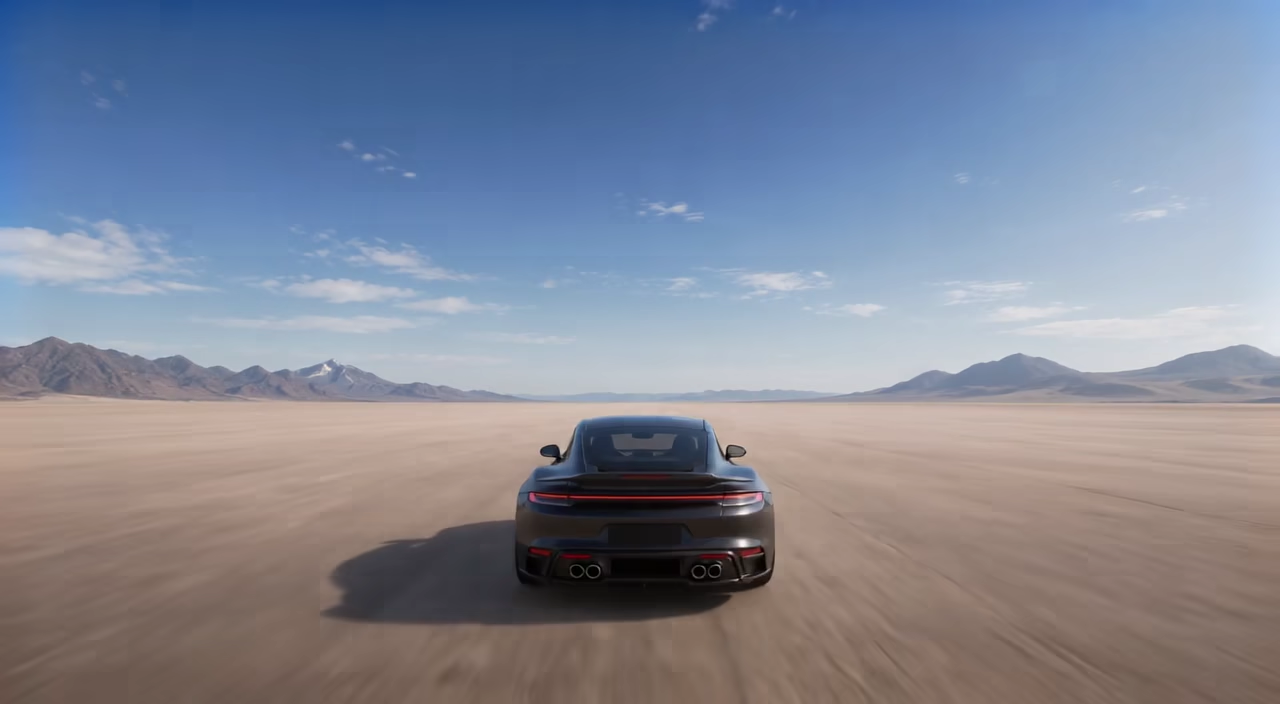 SANA-WMCamera-controlled world model with streaming and bidirectional variants.
 FlashVSRStreaming video super-resolution.
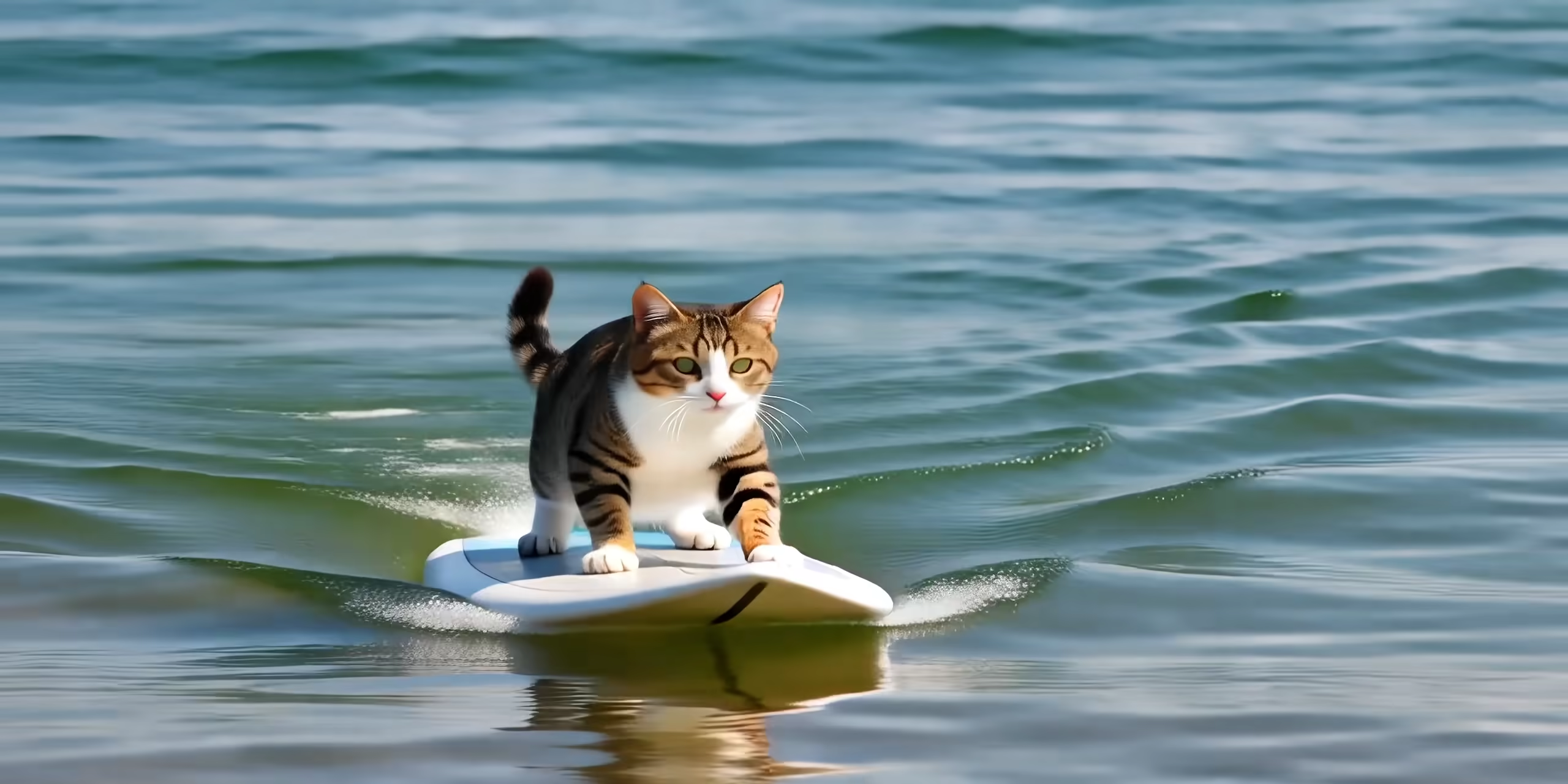 SwiftVRReal-time streaming video restoration with 2× and 4× presets.
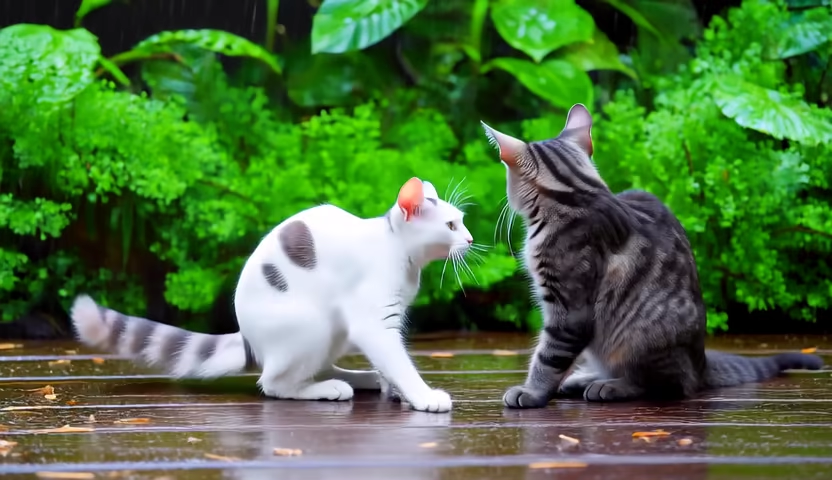 Wan 2.1Bidirectional text-to-video and image-to-video generation.
 Wan 2.2 TI2V-5BBidirectional text-and-image-to-video generation.
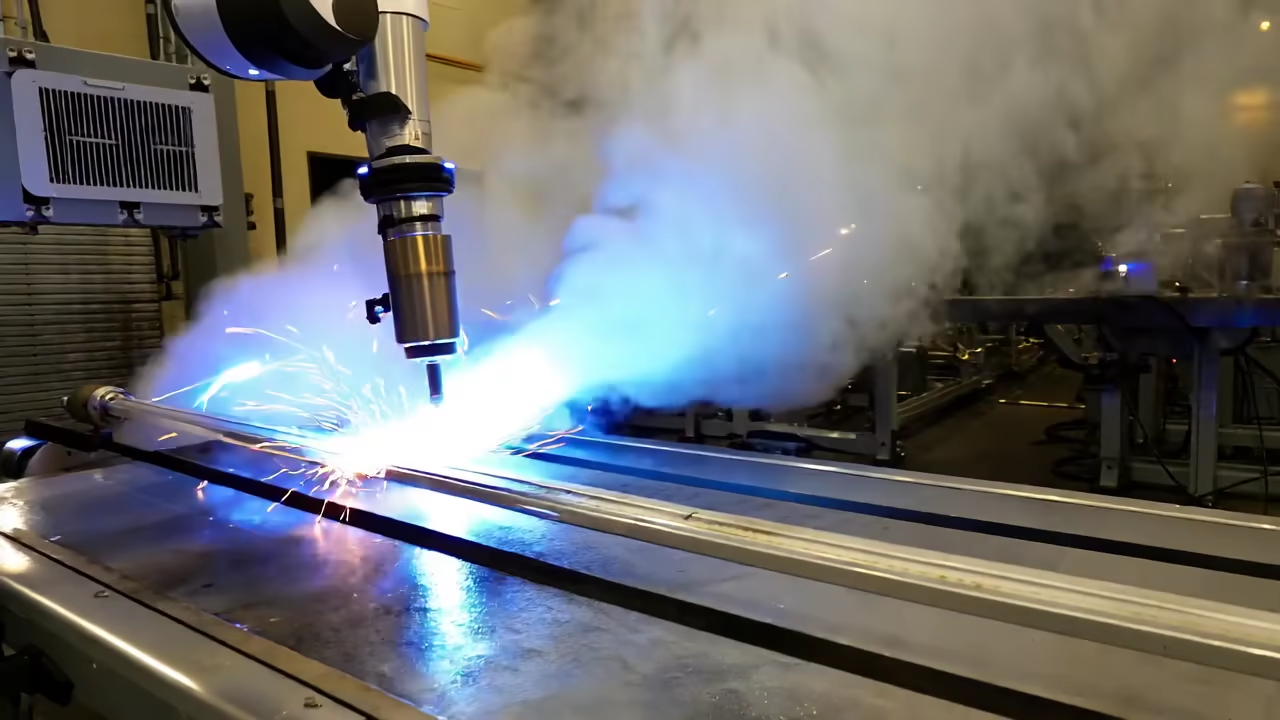 Cosmos-Predict2.5Bidirectional Text2World, Image2World, and Video2World generation.